
Where nobody knows your name...
Tracing the anonymous faces at the start of Cheers.

Pushed to pick one, I think Cheers might be my favourite sitcom of all time.
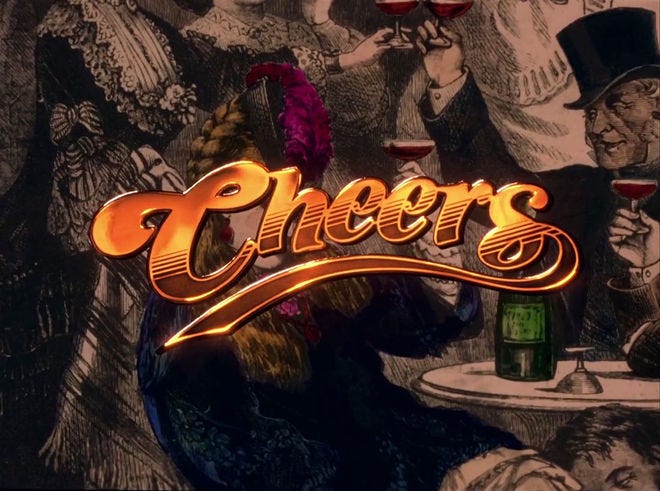
Undoubtedly, part of its enduring comfort is that graphic title sequence. It’s a fantastic montage which nails the eternal appeal of a ‘third place’ where you can get quietly hammered with a bunch of familiar characters, rather than going home to the real world with all its complexity, irritation and grief. Exactly why you watch a sitcom, in fact.
The soothing effect is partly down to the song, but helped by a dreamy Ken Burns-ish montage of vintage hand-tinted engravings and photographs of various bars and drinkers, gliding through time from the end of the 19th Century to now. (Ken Burns, someone pointed out on a Reddit chat, has used some of the same stock library photos of turn-of-the-century America in his documentaries. Bad luck for viewers, lost in the sweep of history, who suddenly find themselves thinking “Norm!”)
According to its signage, Cheers, the fictional bar, was founded in the 1890s. One of the core gags of the show is that everything changes, but never changes, following the rules of any good sitcom. (There’s that unbeatable cold open where a traveller returns to Cheers to notice that everything is different now, even the wood panelling ‘behind Norm’.)
The title sequence reinforces the feeling that the faces might change, that these figures might not match the 1980s cast you recongnise… but they almost do. The bar’s inhabitants are all playing roles, like a boozy Commedia Del Arte, bolted to their barstools, unable to escape their parts in a neverending lock-in. It’s the funny version of the photo at the end of The Shining. “You’re the mailman. You have always been the mailman.”
The titles change from season to season, as cast members come and go, for professional or sadder reasons, as with the death of Nicholas Colasanto (‘Coach’ Pantuso). Sometimes a new character arrives, such as Kelsey Grammer’s Frasier, or is promoted from background barfly to a key part of the Cheers family. John Ratzenberger, who plays Cliff Clavin, originally auditioned for George Wendt’s part, and when he didn’t get it, claimed a neighbouring barstool instead. He made his part so memorable that Cliffy landed his own title card in later seasons. It’s strange to not see the pair billed as a double act in Season One.
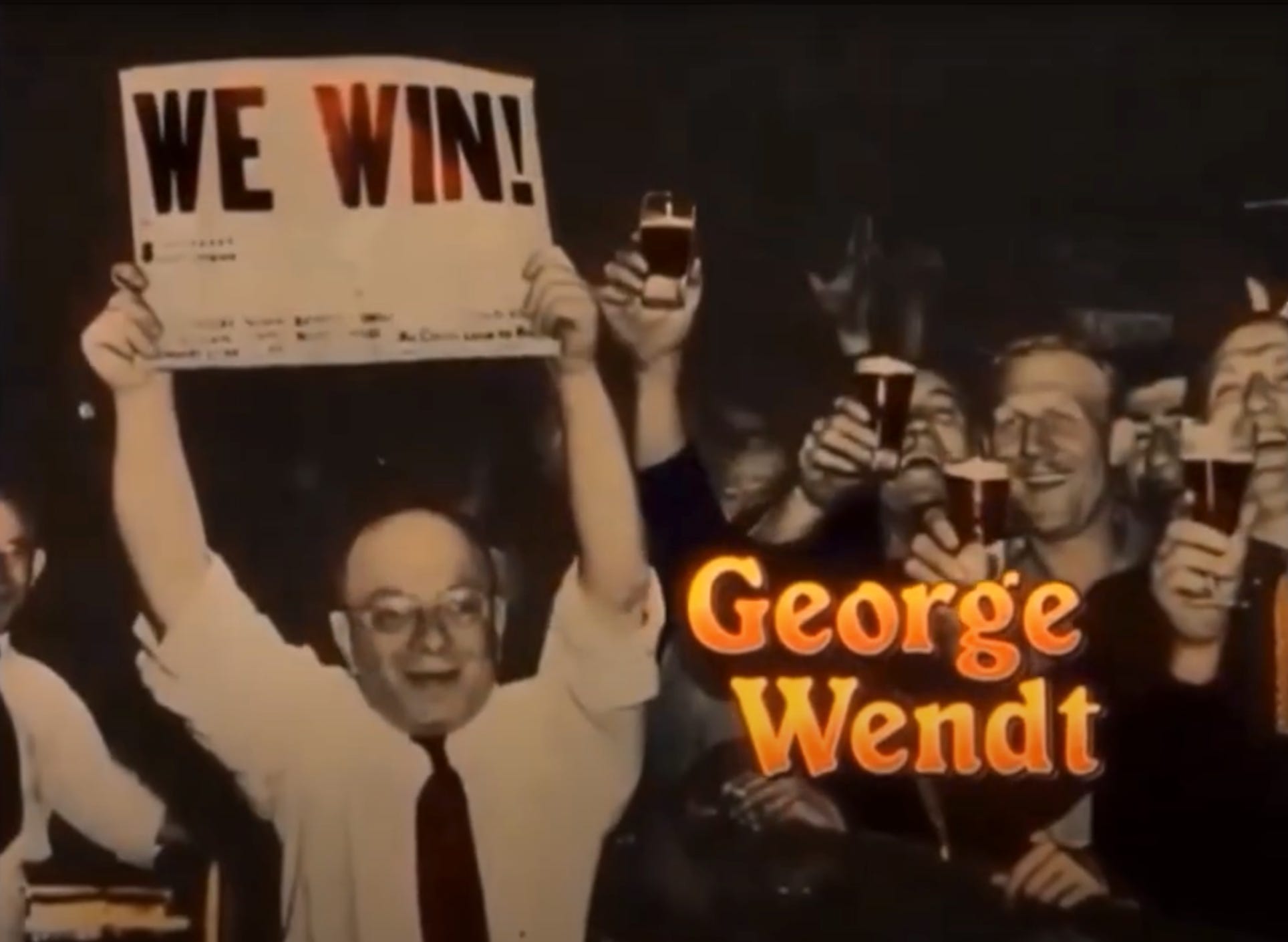
This morning I was thinking about this title sequence, and in particular, I was wondering exactly what it was that had been won, in the memorable newspaper headline WE WIN, held up as one of two cards behind one of George Wendt’s credit. I’d always thought it was World War Two, but maybe it wasn’t. Was it the campaign against prohibition? Something historical and American that I didn’t know? And then I naturally started to muse about where the photos had come from.
So I went for a dig. I haven’t found any new information, I don’t think, this is all from various internet threads and message boards going back decades (and there are a lot of those) but I couldn’t find one thread with all the pictures on, and nothing with them side-by-side with the title cards from the show, so I thought I’d collect as many as I could find together, for fun.
I hope you find it as fascinating as I did.
After a few engravings of 19th Century boozehounds, this is the first face we see.
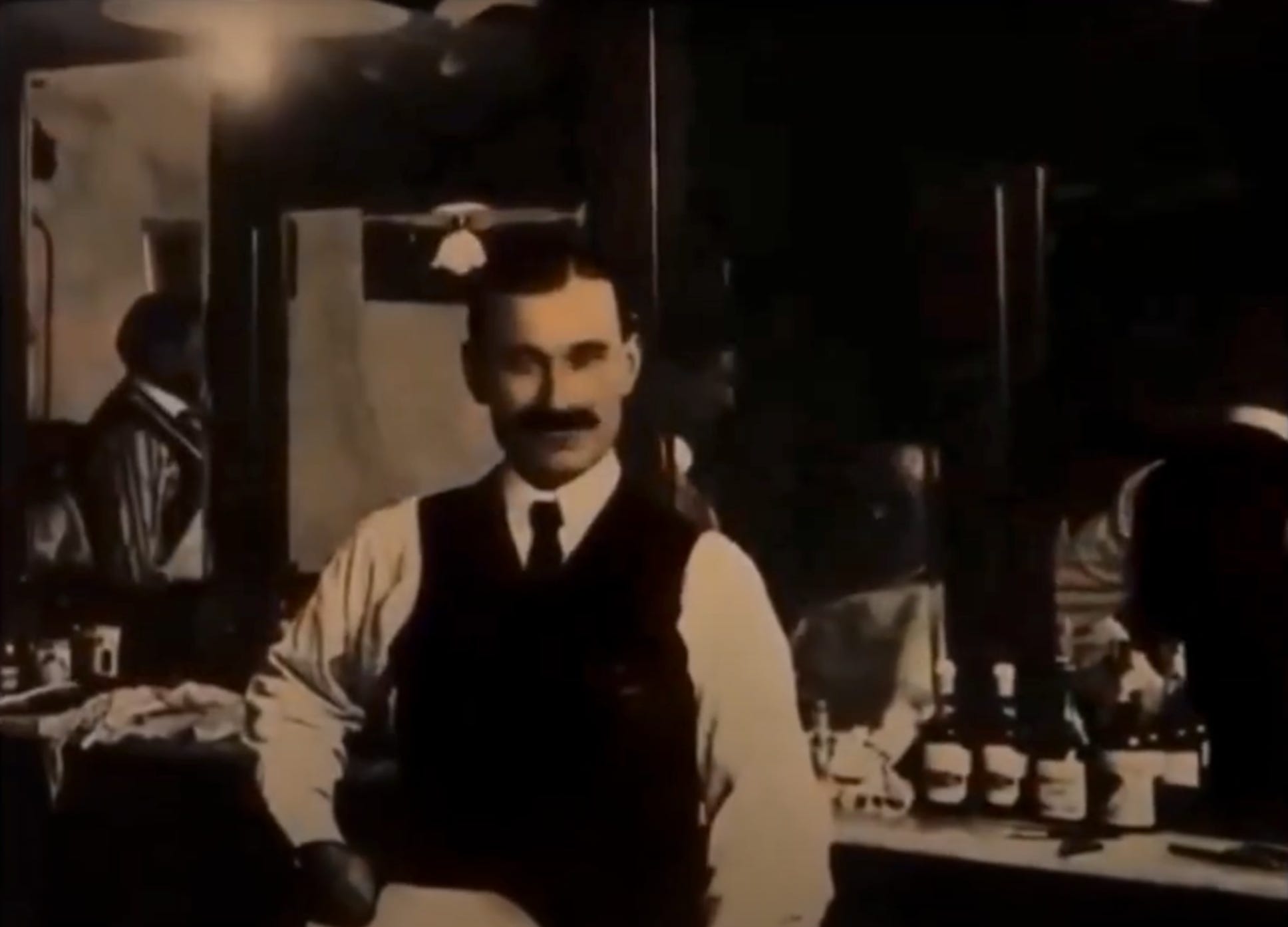
There’s no credit over this one. It is just meant to say to viewers “welcome to the bar”. Which is strange because it’s not actually a photo of a barman at all, but a barber.
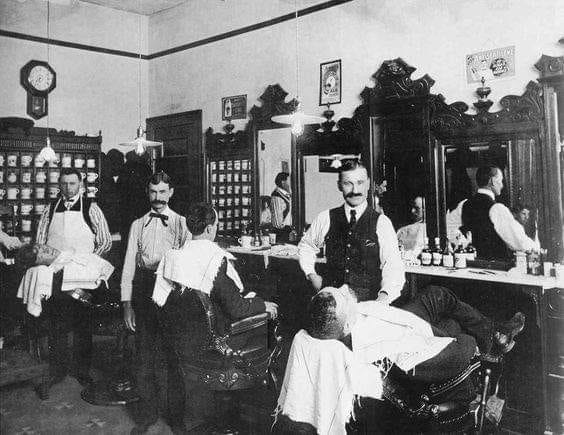
This was taken at Rudy Sohn’s barbershop in Junction City, Kansas. There are a few of these in the set, passing for drinking dens, when they’re not.
Then, over another engraving, we get a credit for the twin leads, billed carefully so neither reads as ‘first’ – a contractual arrangement for the actors, apparently.
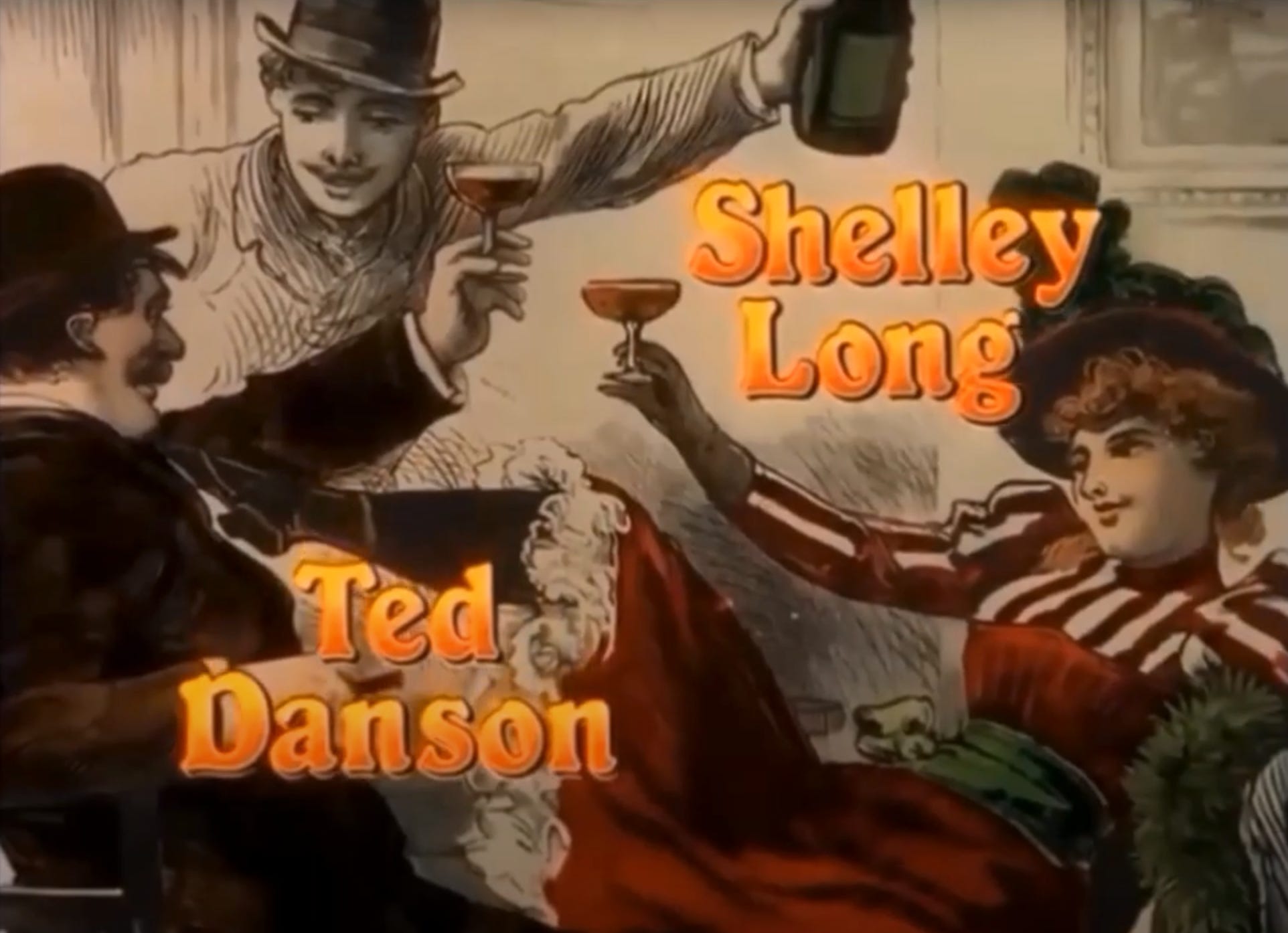
I’ve no idea where this illustration is from.
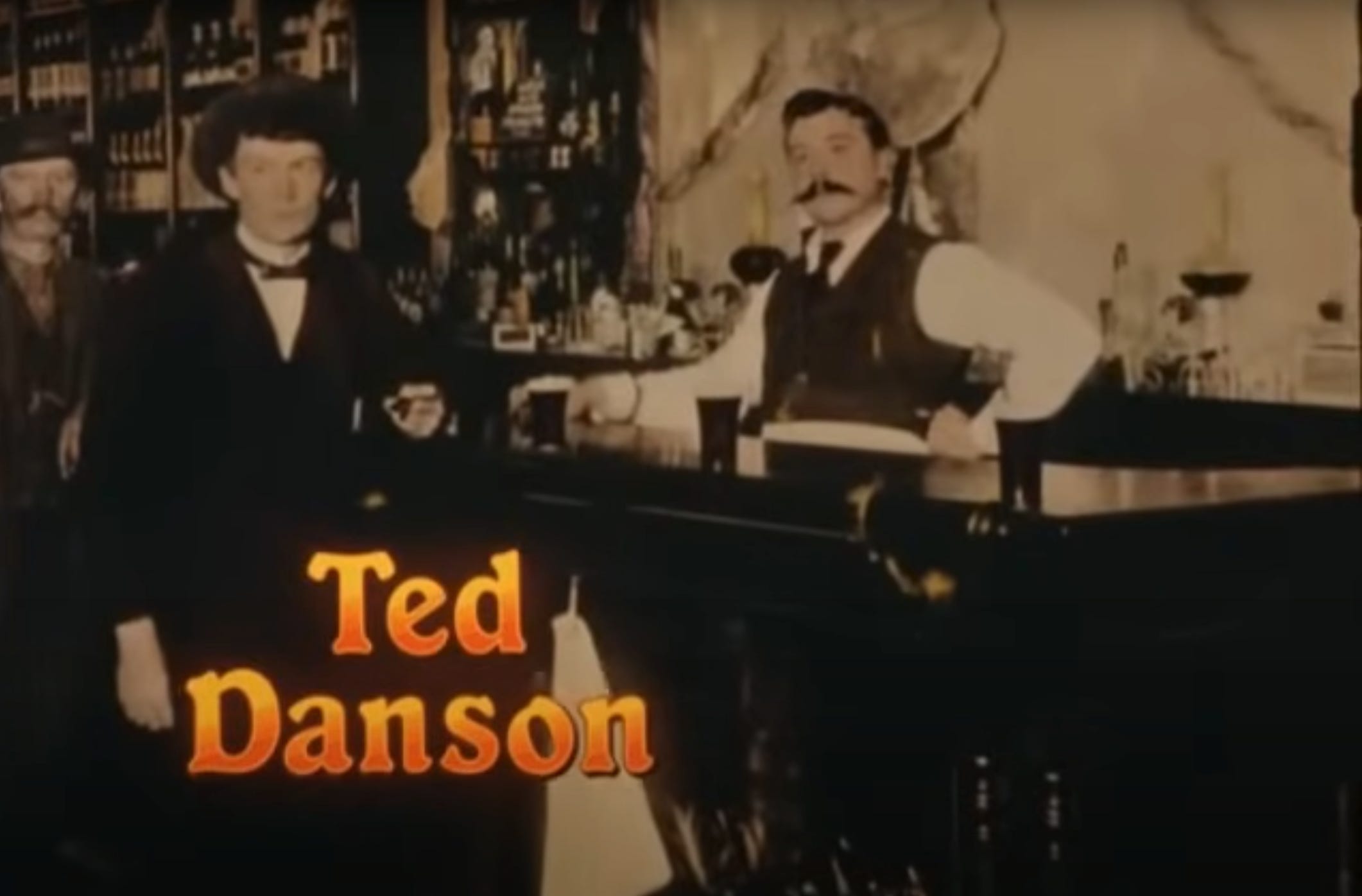
In later series, after Shelley Long leaves, Ted Danson gets his own card.
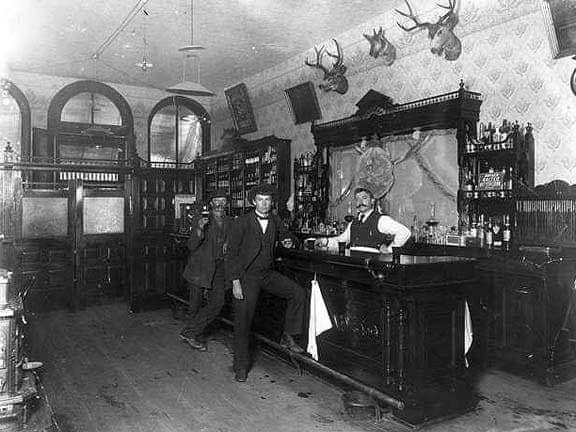
This photo was taken at the Tall Gate Saloon in Black Hawk, Colorado. It actually looks a bit like a Scottish Highland Hotel. Maybe that was the style they were going for.
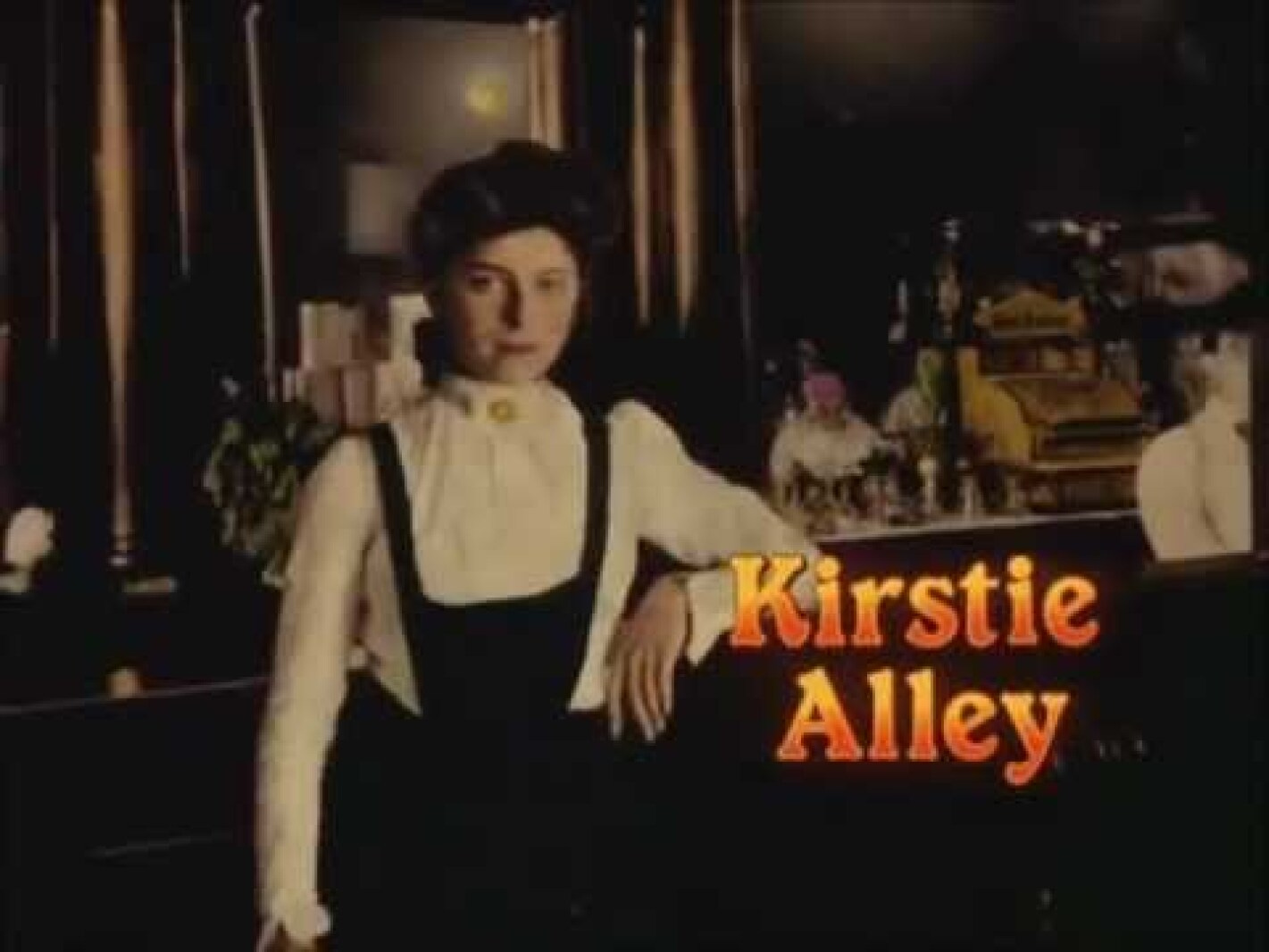
When Ted Danson got his own card, top billing could be split without argument. Sam Malone was the show’s star now, and his romantic foil was obviously going to take the second credit. This is Kirstie Alley’s title card, after she joined the series. I can’t find a source for this one.
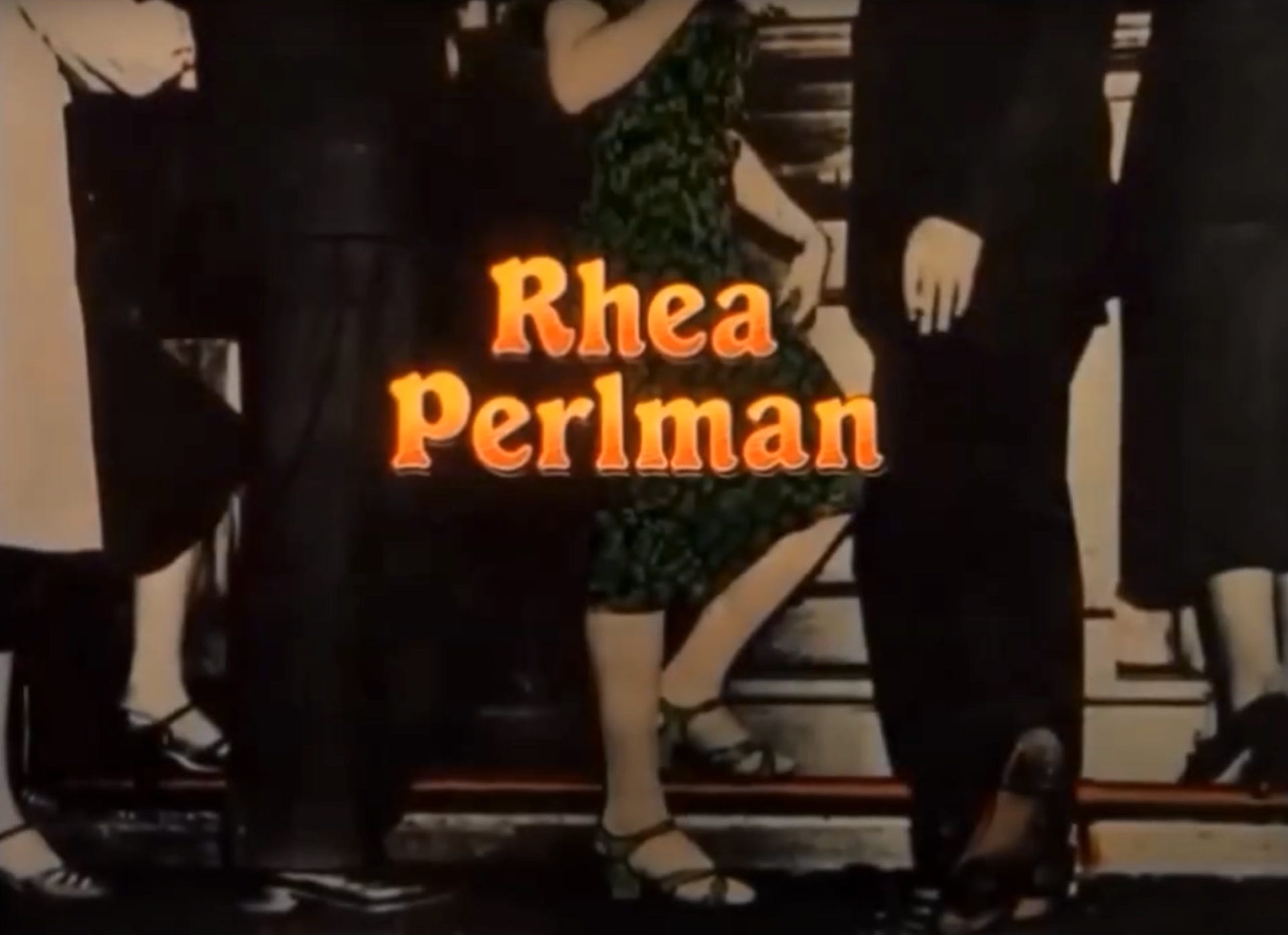
Rhea Perlman, next on the bill, is represented by a rather glamorous pair of legs, with one foot up on the bar rail. (This may be significant, we shall see later, as a political statement...)
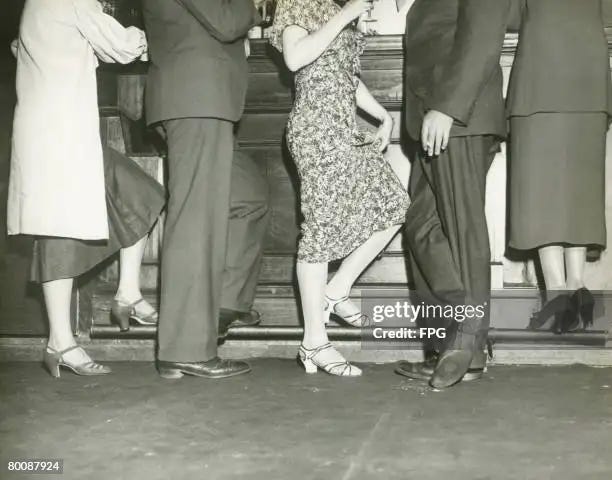
This is a stock image, currently available on Getty Images, but previously supplied by the Freelance Photographer’s Guild, whose archive was bought up by Getty. The labelling sadly doesn’t allow us to identify it any more specifically than a basic description of the photo.
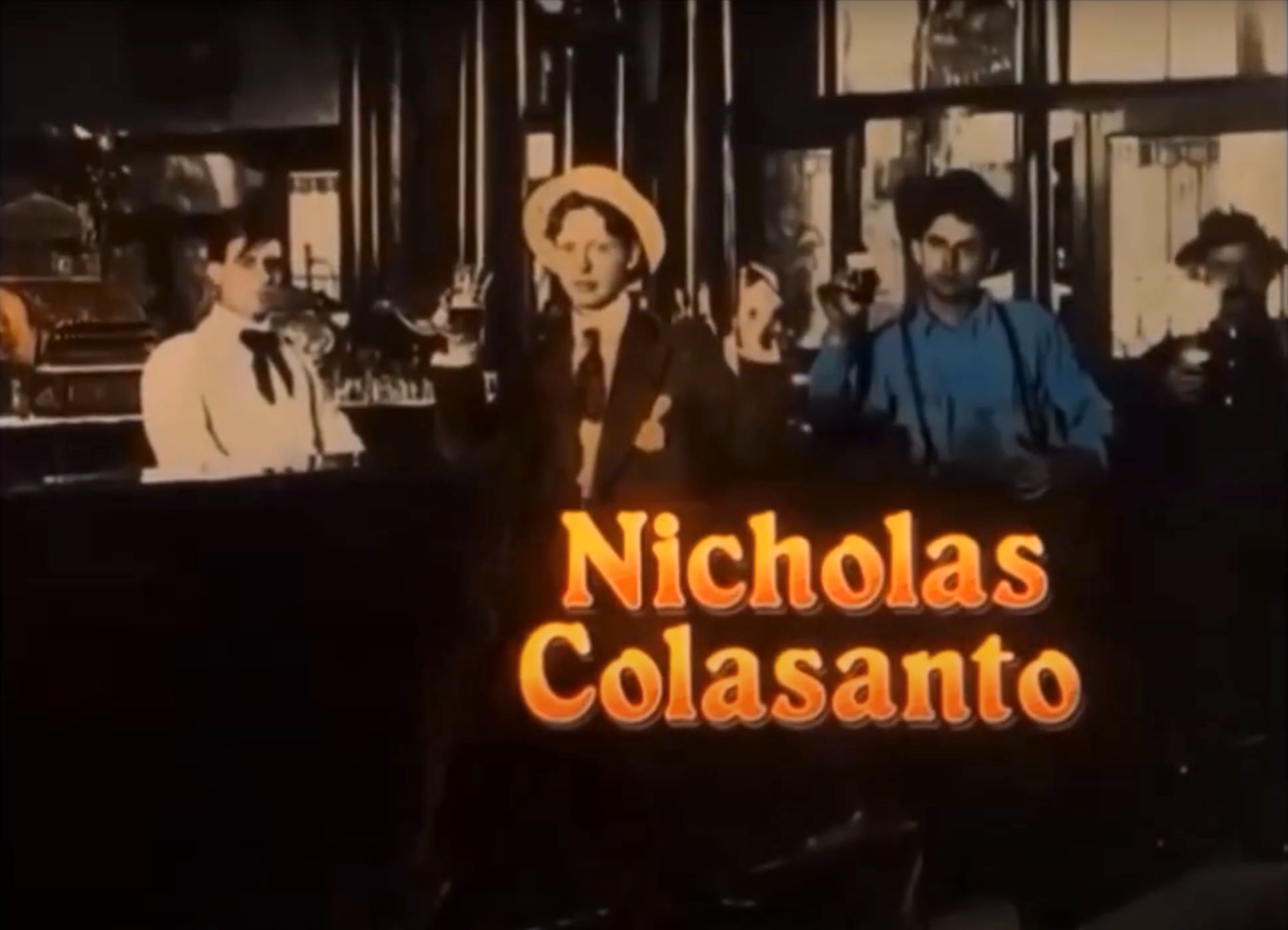
Nicholas Colasanto – bartender Coach Ernie Pantuso – is next.
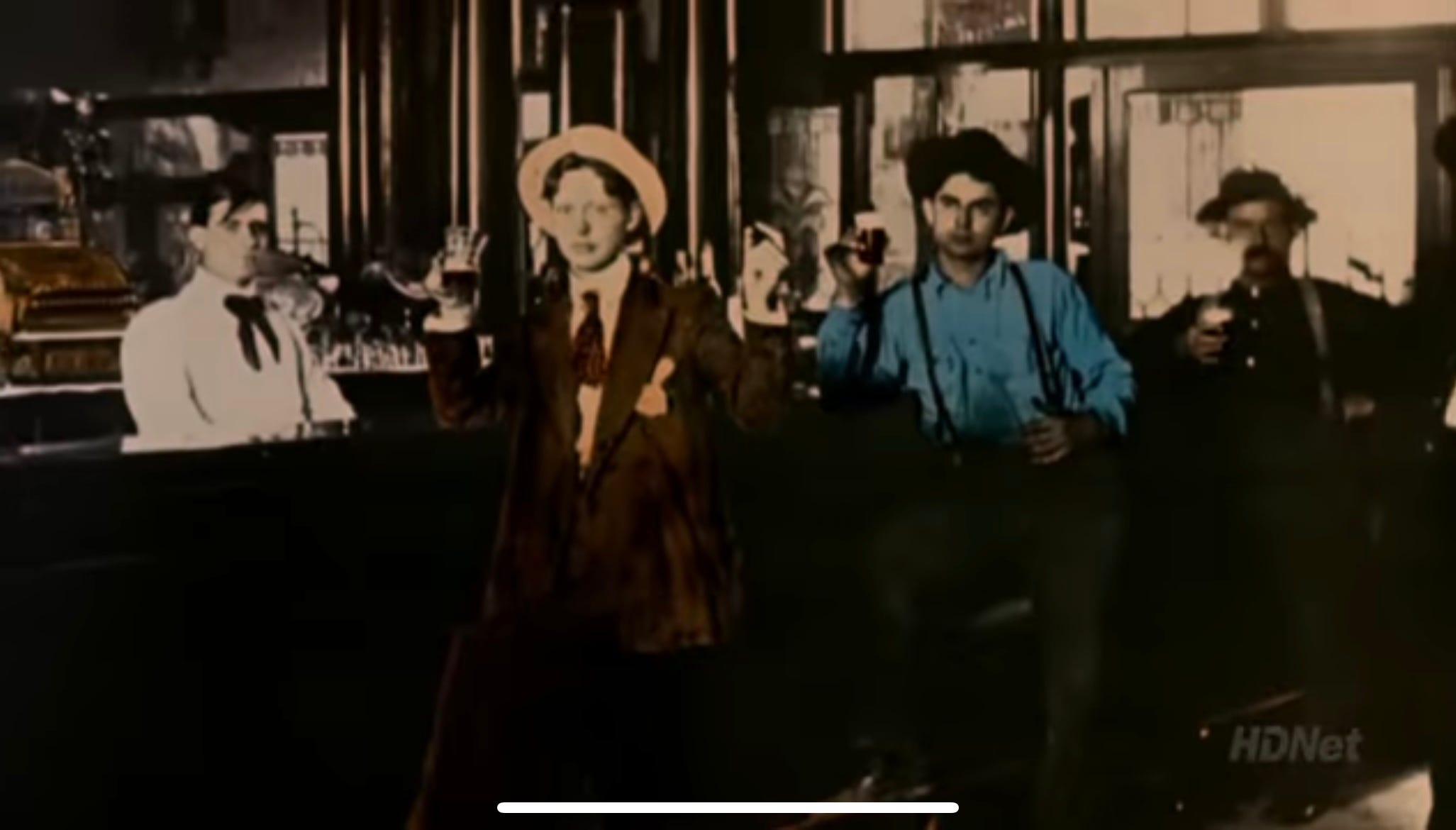
After the actor died, his place behind the bar was taken by Woody Harrelson, but the title card remained, without his name, in tribute, I imagine.
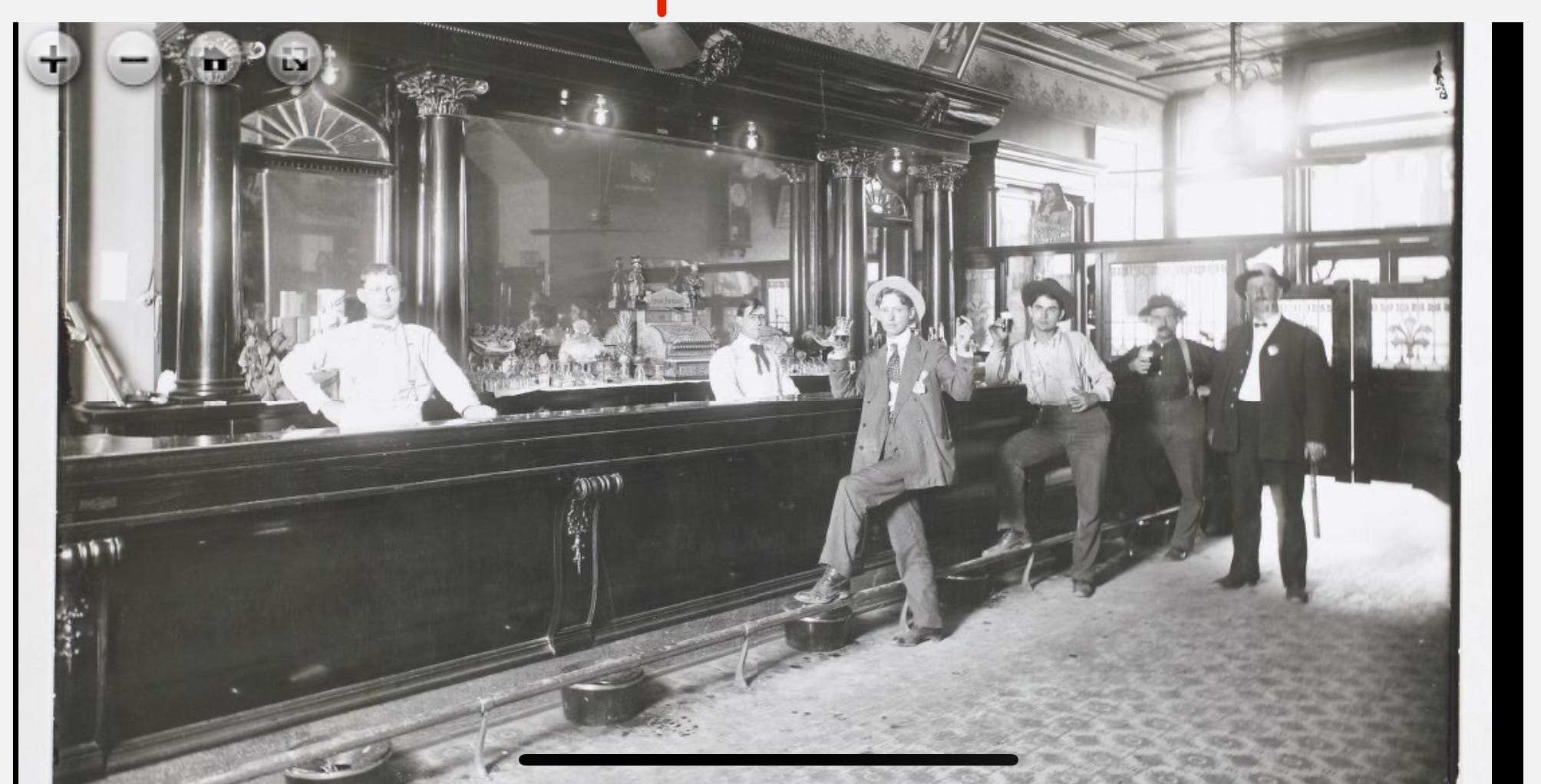
This is a photograph from 1906, by J. J. Pennell, entitled Men Drinking At The Bar in the Horseshoe Saloon. Pennell’s respected collection of photos of turn-of-the-century people at work and play provides a few of the Cheers title images.
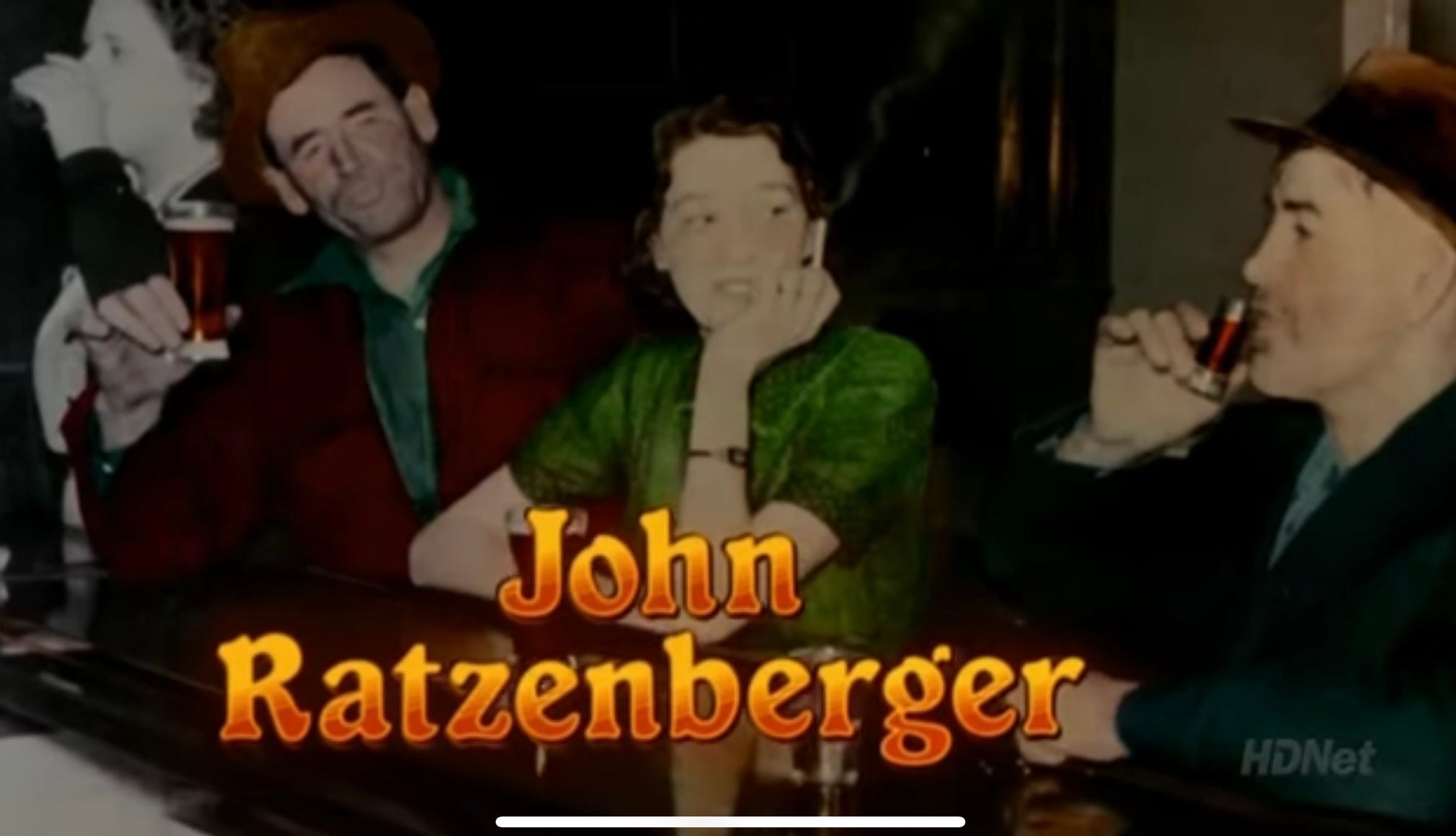
Once Cliff Clavin was established as a character, John Ratzenberger got the next card.
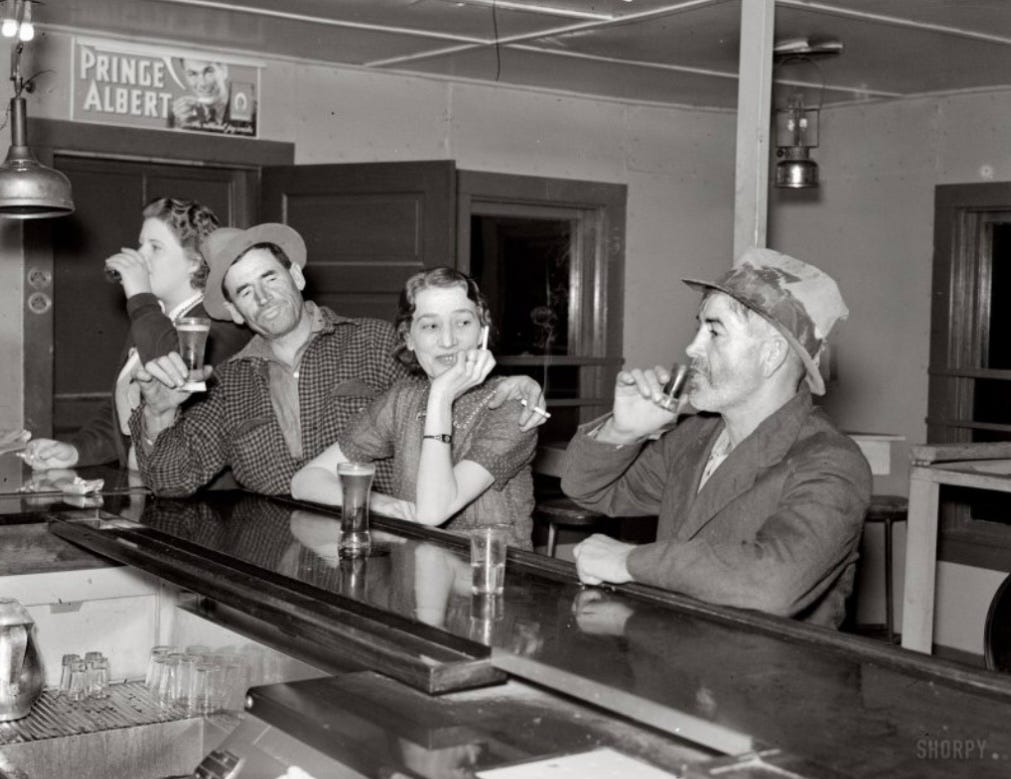
This is a photo entitled ‘Saturday night in a saloon’, by Russell Lee. It was taken for the Farm Security Administration, in September 1937. Notice that unlike the real drinker in the photo, ‘Cliff’ in the title sequence card does not have his hand on the woman’s shoulder, probably because that would read as a bad character note.
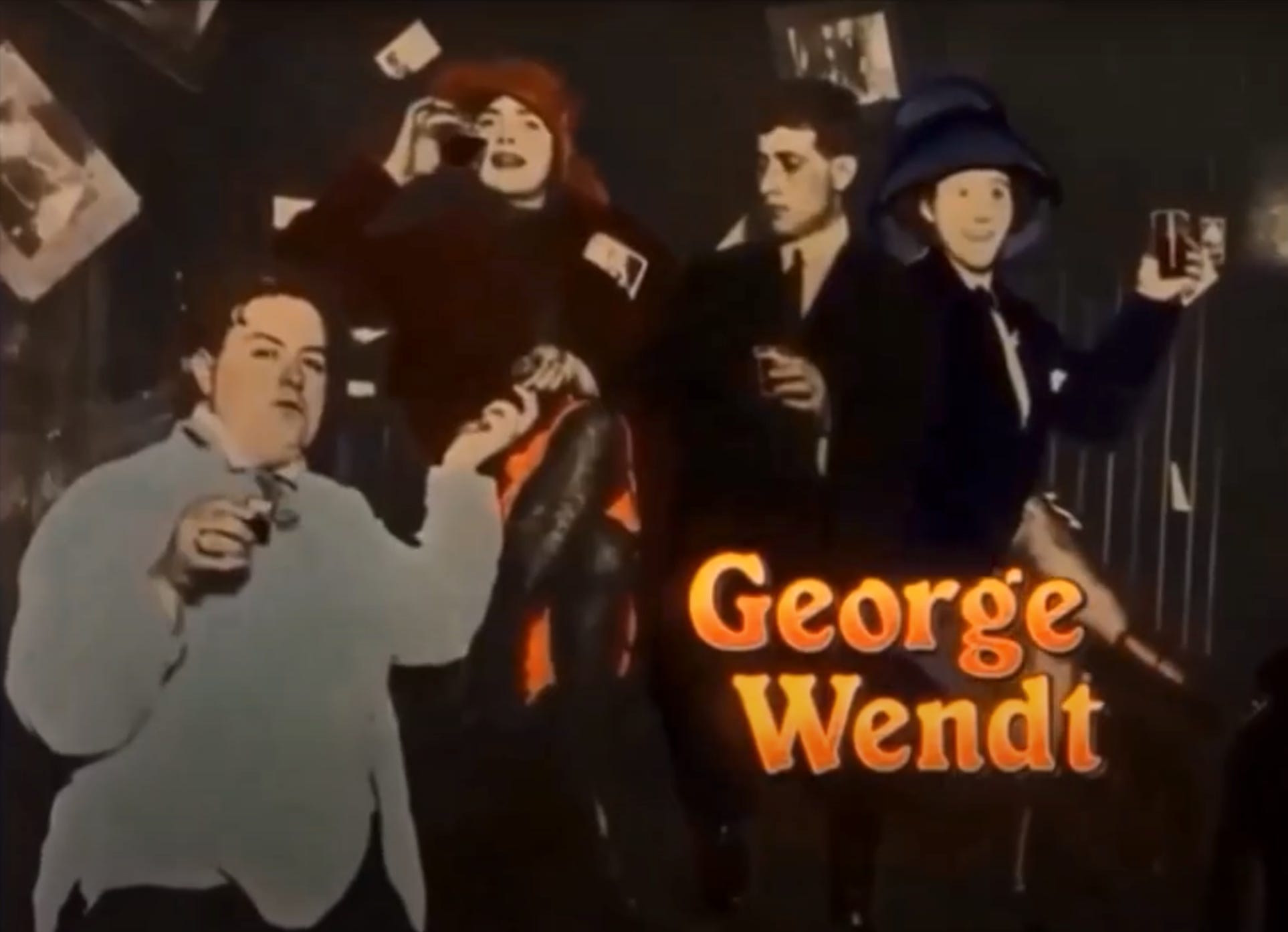
George Wendt, oddly, gets two cards behind his name. The first is this wonderful character-specific card.
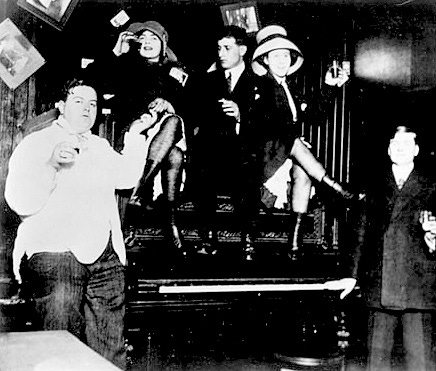
This photograph is from a book entitled ‘Gay Dogs Of The Barbary Coast - an Informal History of the San Francisco Underworld’, by Herbert Asbury, published in 1933.
It’s enjoyable to see the picture in context, our genial ‘Norm’, reframed as an ‘underworld’ figure.
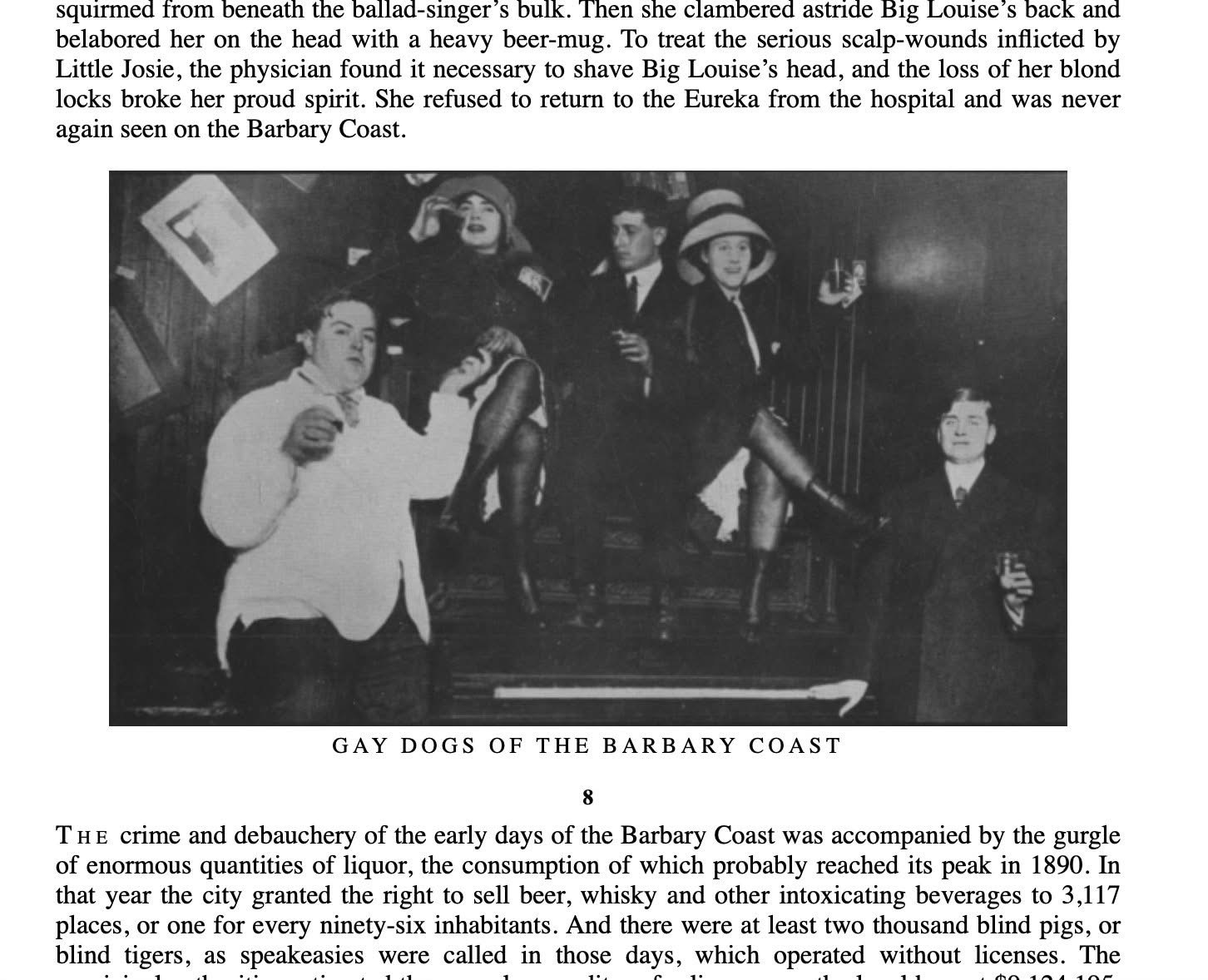
As with all these images, the colourisation, and the placement of the typography makes a character the focus of our attention, where in its original form, it’s more of a group shot, or an illustration of something quite different.
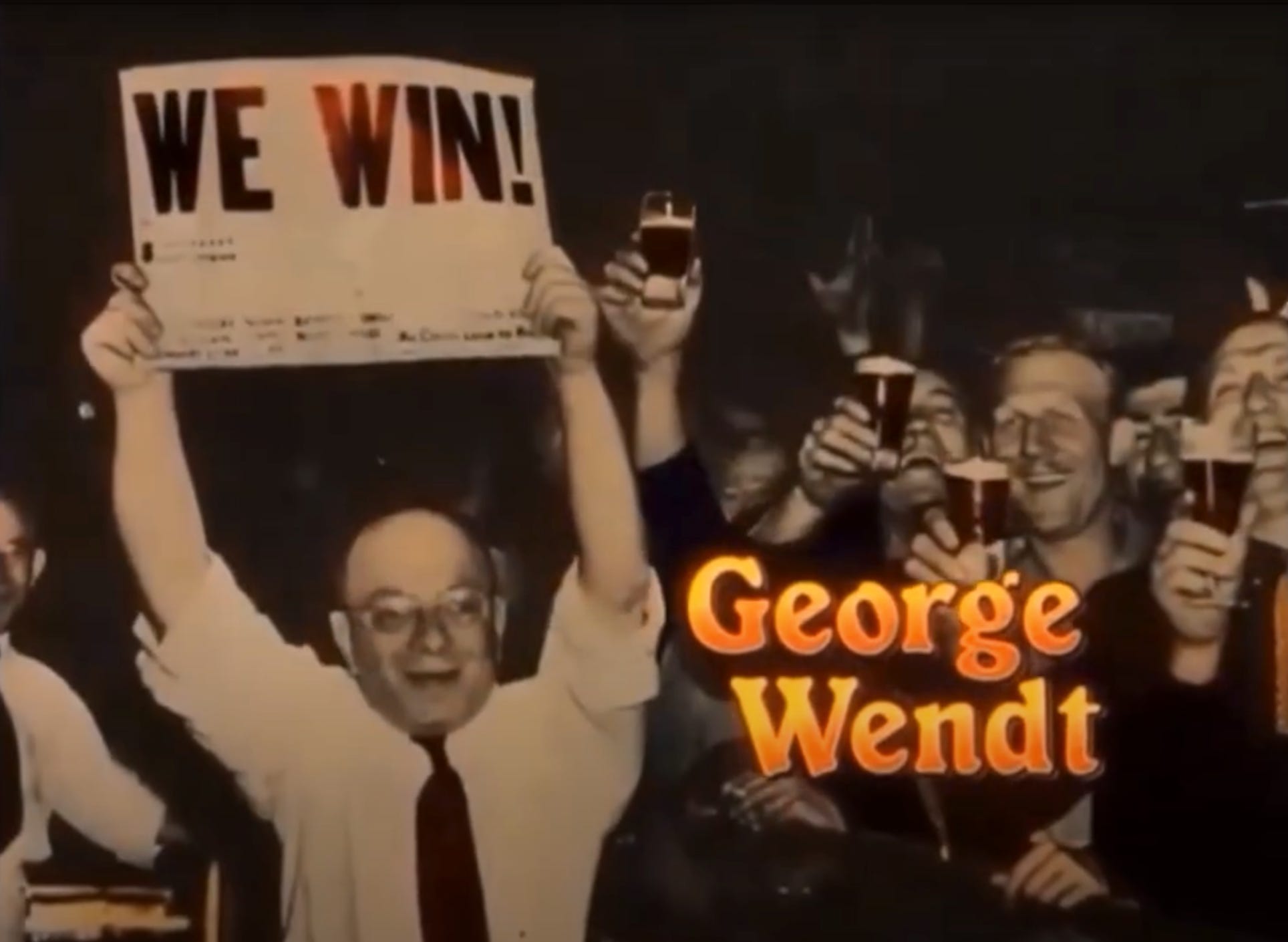
The second image to appear under George Wendt’s billing is the memorable ‘WE WIN’ card.
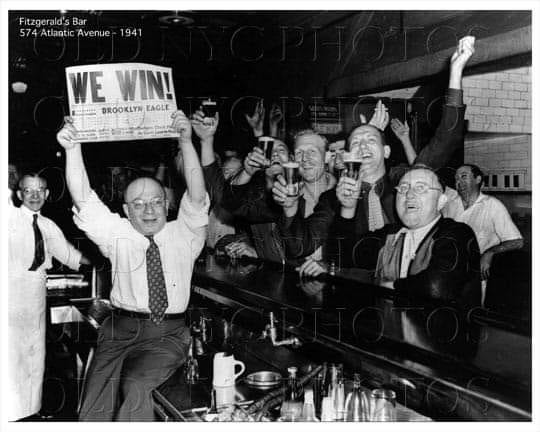
This is a photo of Fitzgerald’s Bar, at 541 Atlantic Avenue, New York, taken by J. J. Pennell, in 1941. So the victory can’t be World War Two after all – this is the year the US entered the war, not the year it left it.
It turns out to be a sports result, not a news story. The Brooklyn Dodgers won the pennant that day (no, me neither), beating the Boston Braves, and that’s what the bar is celebrating. Hardly appropriate for a sitcom about a former pitcher for the Boston Red Sox; though WE LOSE would set the wrong mood entirely.
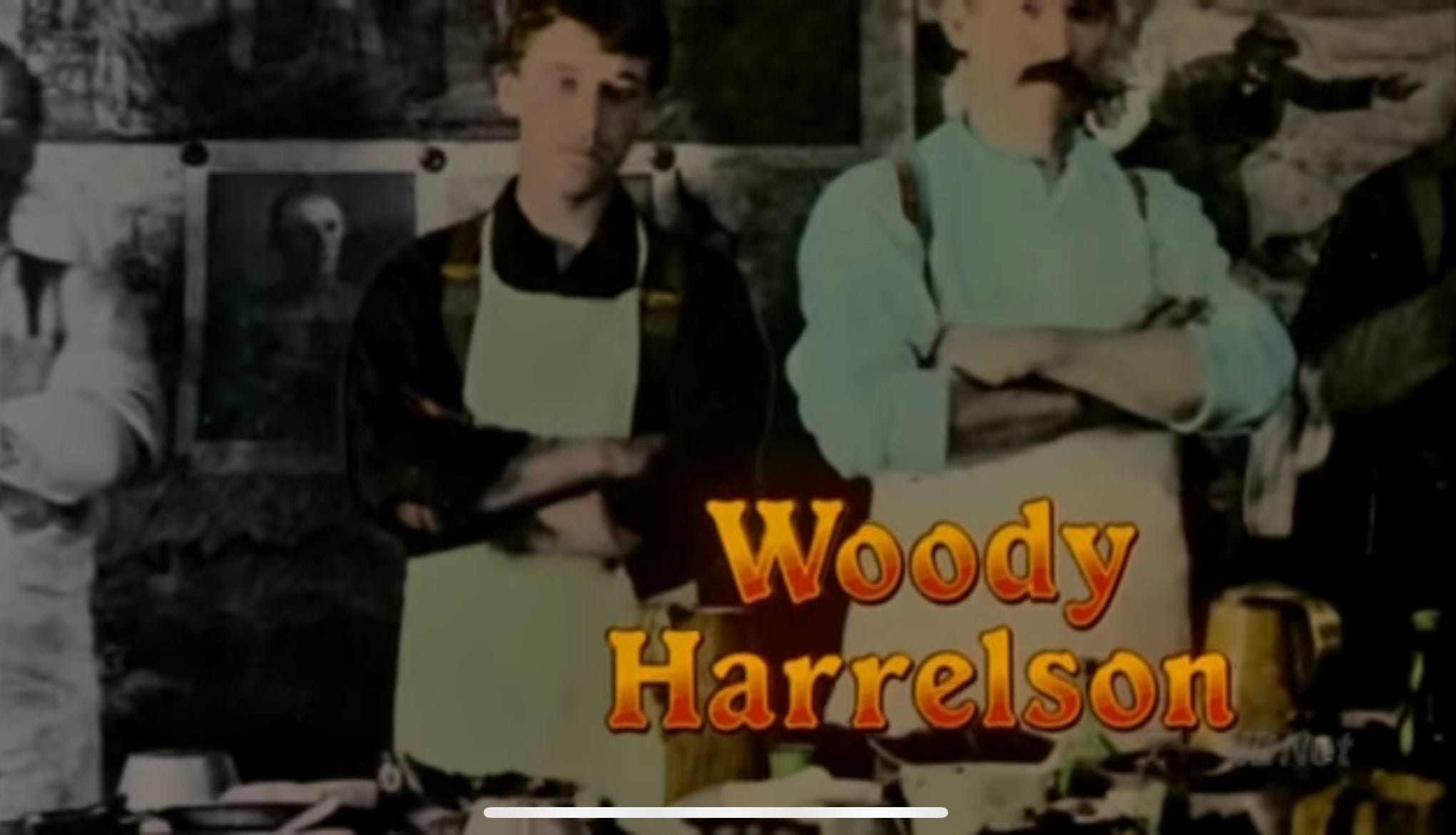
Woody Harrelson’s credit is another image that screams ‘bartender’….
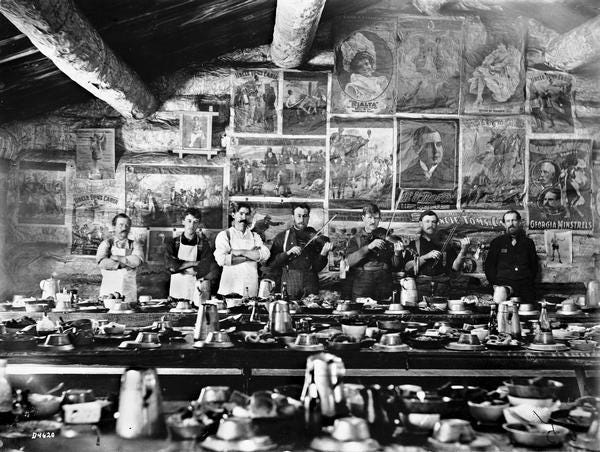
… and it’s not. This is the dining room at the August Mason Lumber Camp in Chippewa Falls, Wisconsin, taken in 1902. The full photo demonstrates how much the framing of the pictures and the associations with the show’s cast does the magic.
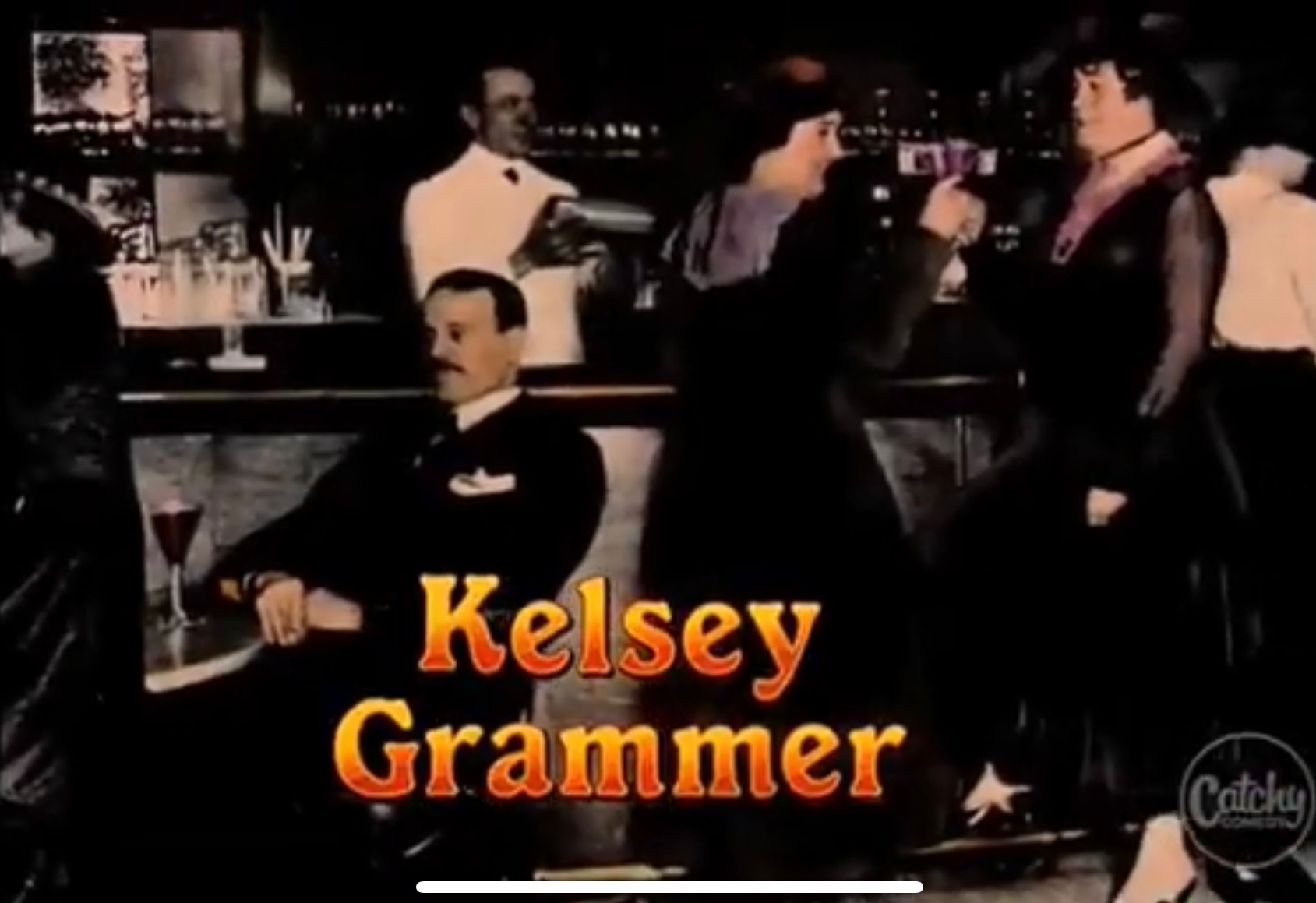
Another later addition to the titles was Not Quite Frasier.
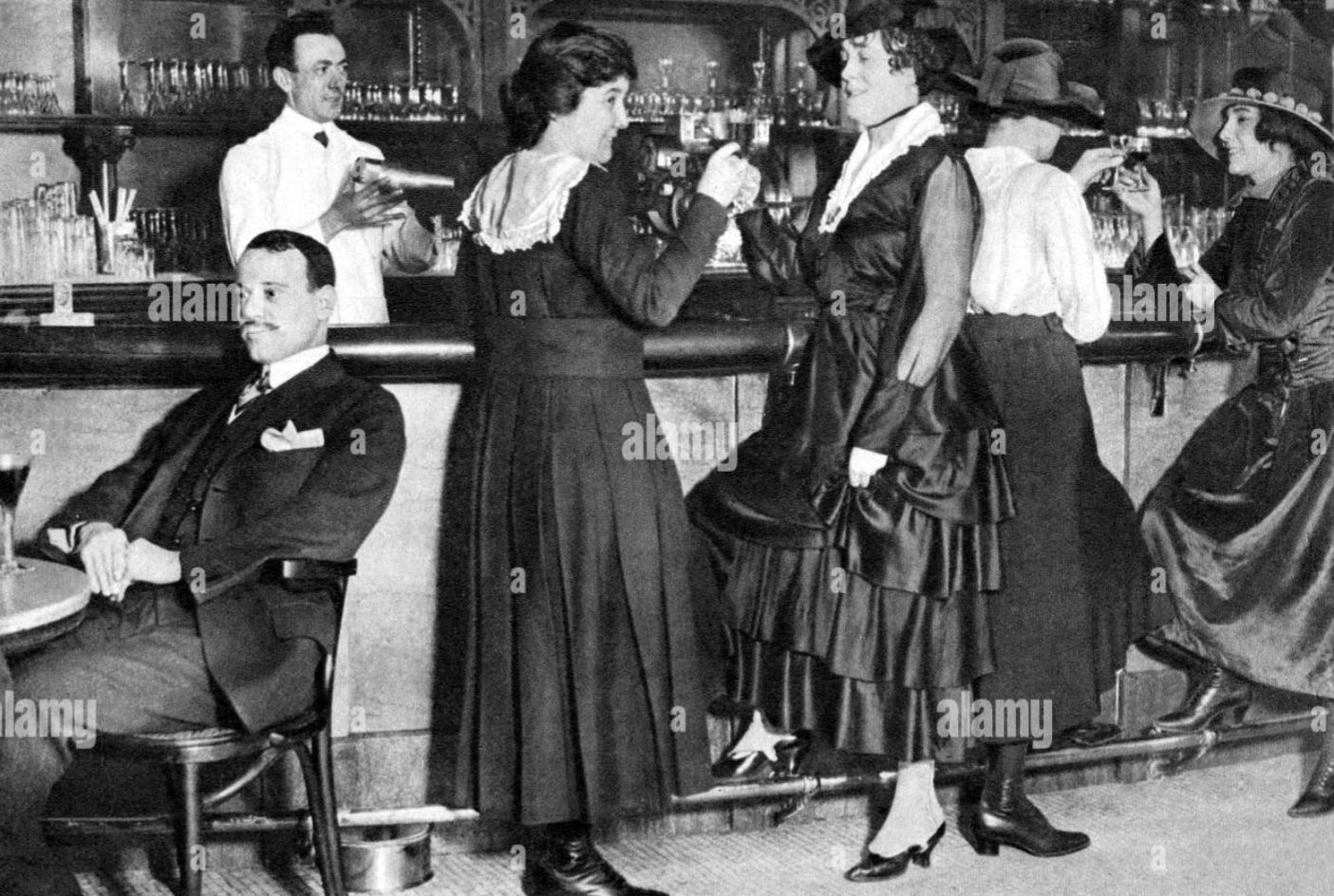
This image can be found in the Alamy picture library, and is captioned: ‘Women in the bar of the Hotel Majestic on Central Park West between 71st Street and 72nd Street. From New York City History and Memories.’
Without Kelsey Grammer’s name across the picture, you can better appreciate the sensational pair of characters behind him. It turns out that these women are the original focus of the photograph, and their pose is significant (compare Rhea Perlman’s card earlier). It’s an historic photo about the changing demographics of social drinking.
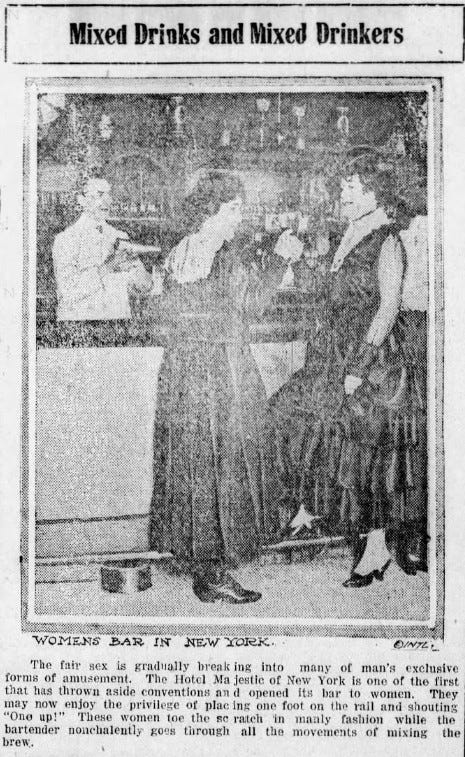
Here’s the picture being used in a contemporary news piece. The text reads:
‘The fair sex is gradually breaking into many of man’s exclusive forms of amusement. The Hotel Majestic is one of the first that has thrown aside conventions and opened its bar to women. They may now enjoy the privilege of placing one foot on the rail and shouting ‘One up!’ These women toe the scratch in manly fashion while the bartender nonchalantly goes through all the movements of mixing the brew.’
What a wonderful bit of copy. ‘Toeing the scratch’ seems to be an important claim on your right to be at the bar. My dad’s just informed me, looking over my shoulder, that his Uncle used to stand extremely close to the bar while sinking pints, so that if he drank too much and fell backwards, his toes would catch on the rail and pull him back upright. Classy.
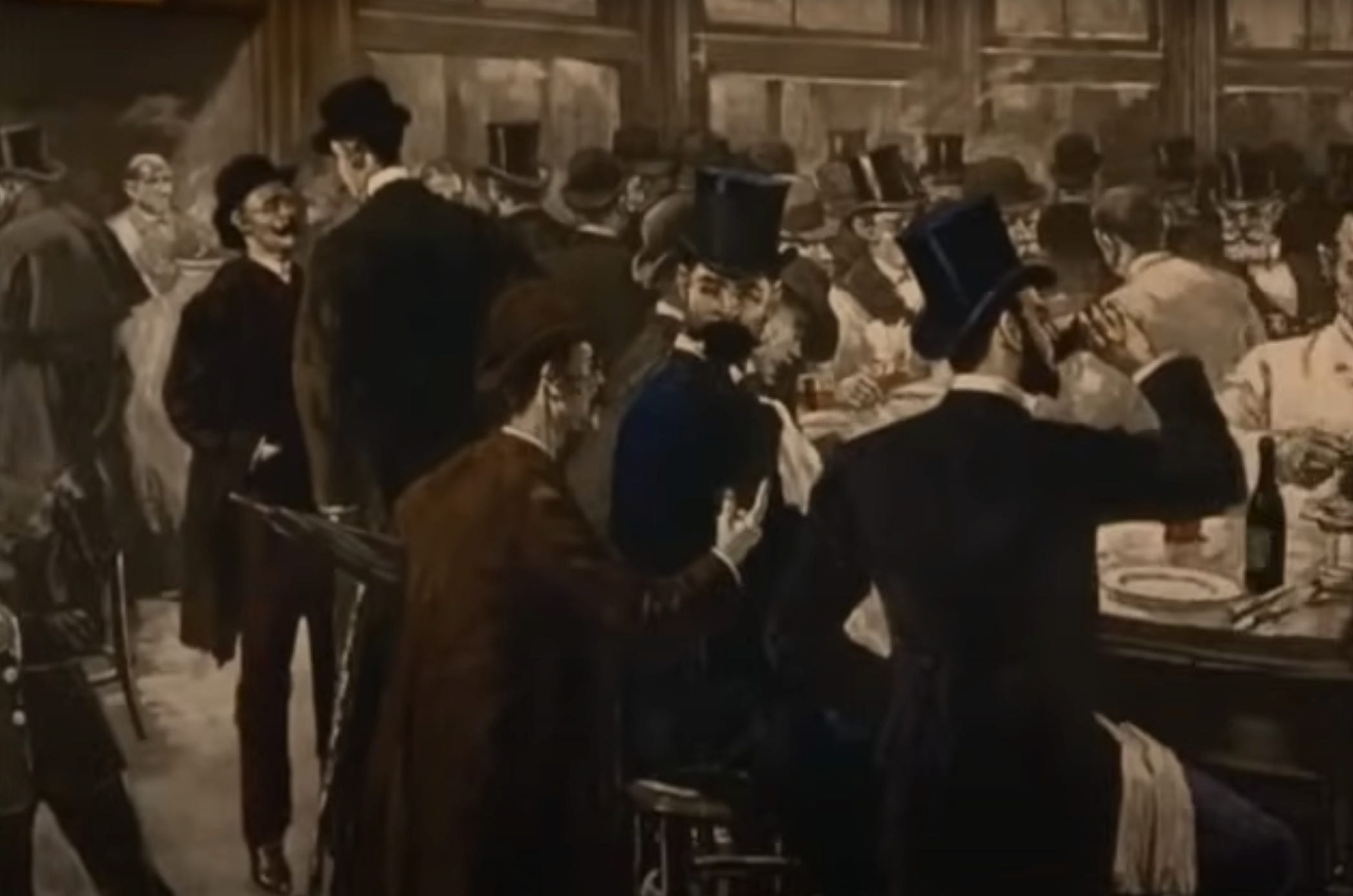
The engravings at the start of the title sequence seem to mainly be anonymous faces, but some eagle-eyed sleuths have found a few of them.
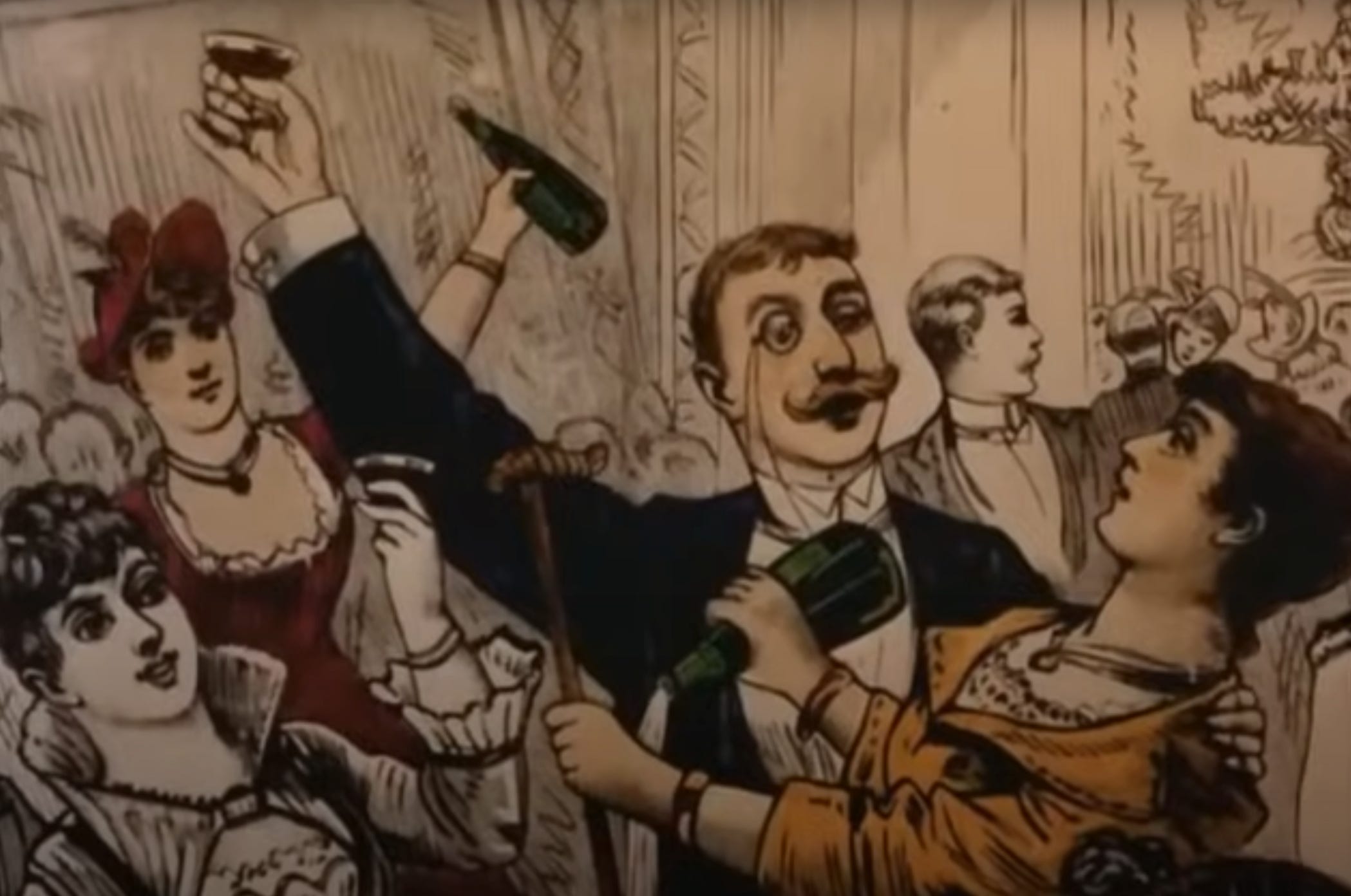
A lovely bit of carousing…
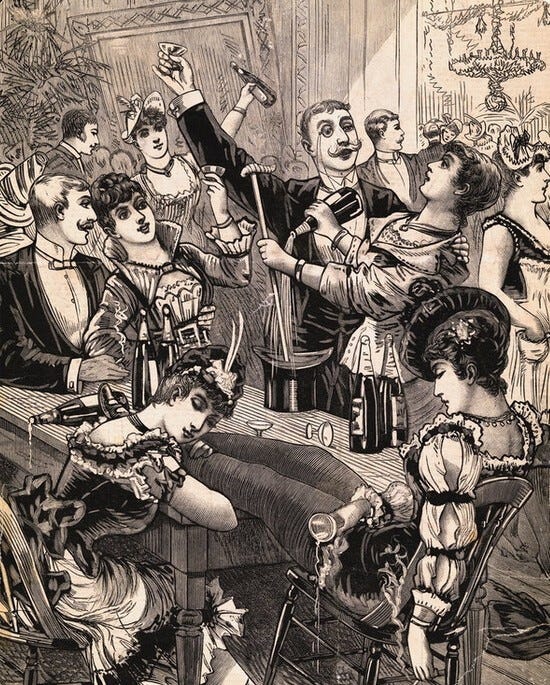
… cropped to remove the women who’ve passed out at the bottom of the frame.
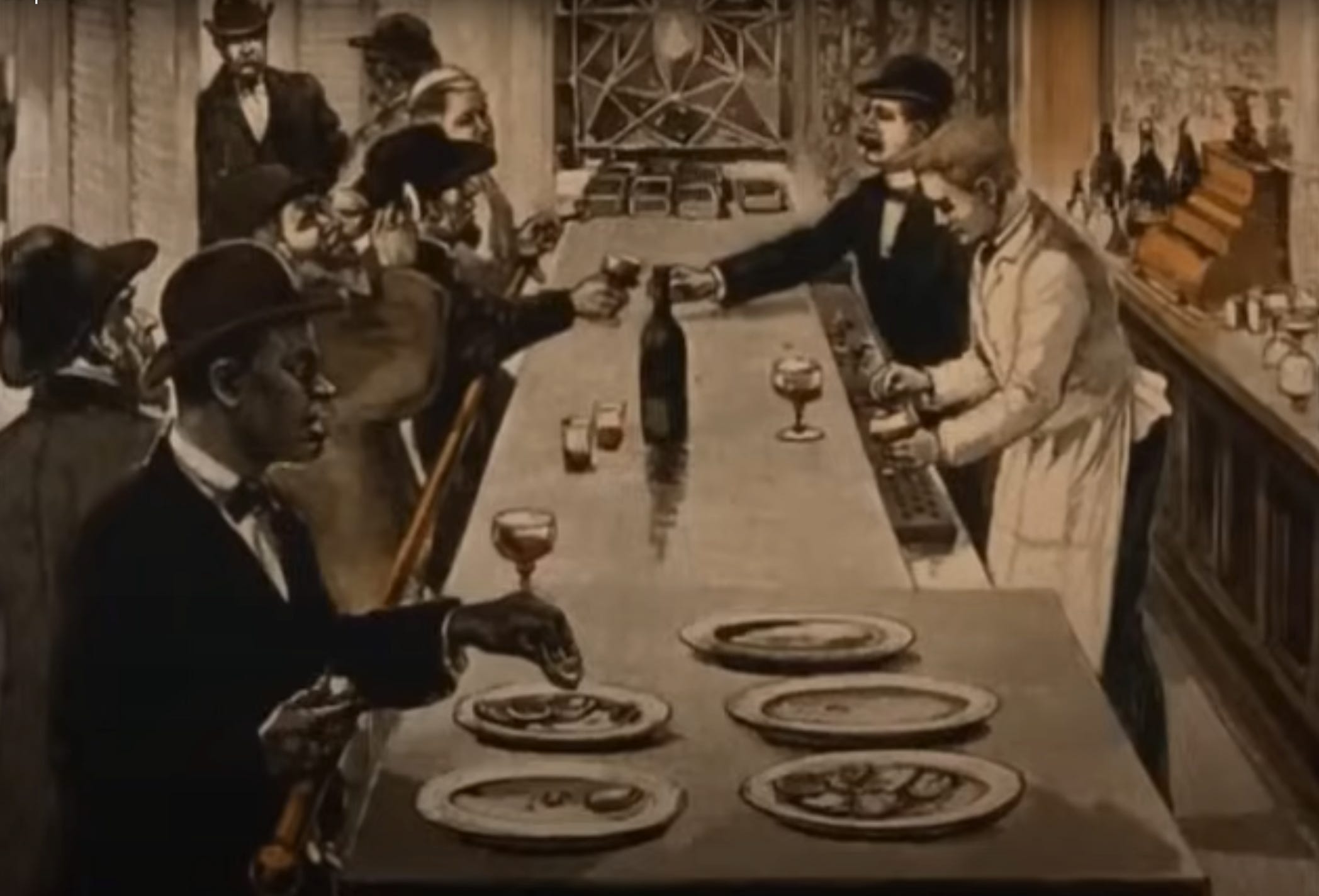
This card slides past quickly, featuring one of the few non-white faces in the titles.
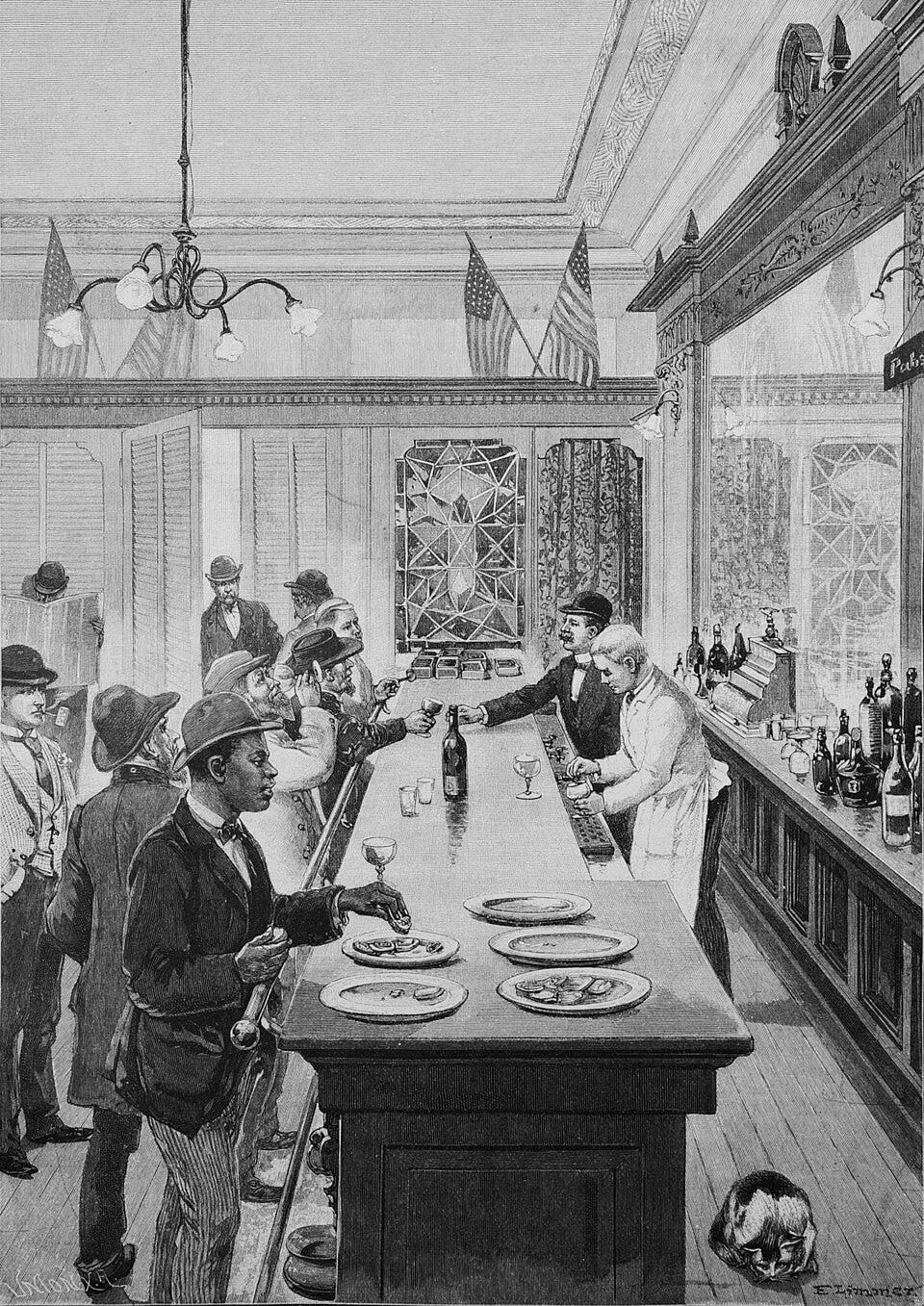
It turns out to be an image taken from the German magazine Die Gartenlaube, dated 1895, though the bar is clearly American, from the flags in the background.
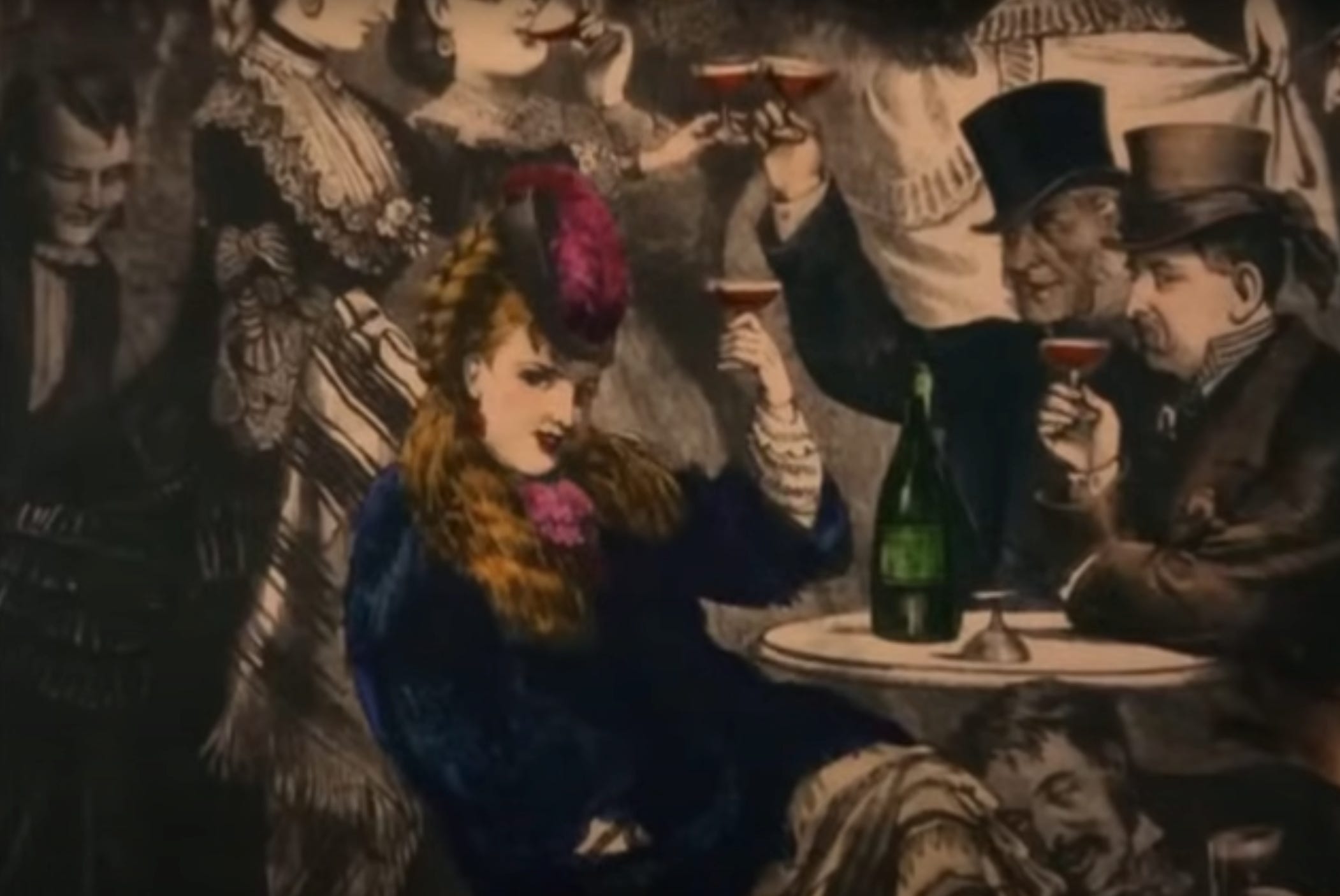
This confident woman’s face is the one that supports the main Cheers logo, and, remarkably, turns out to be a recognisable historical figure.
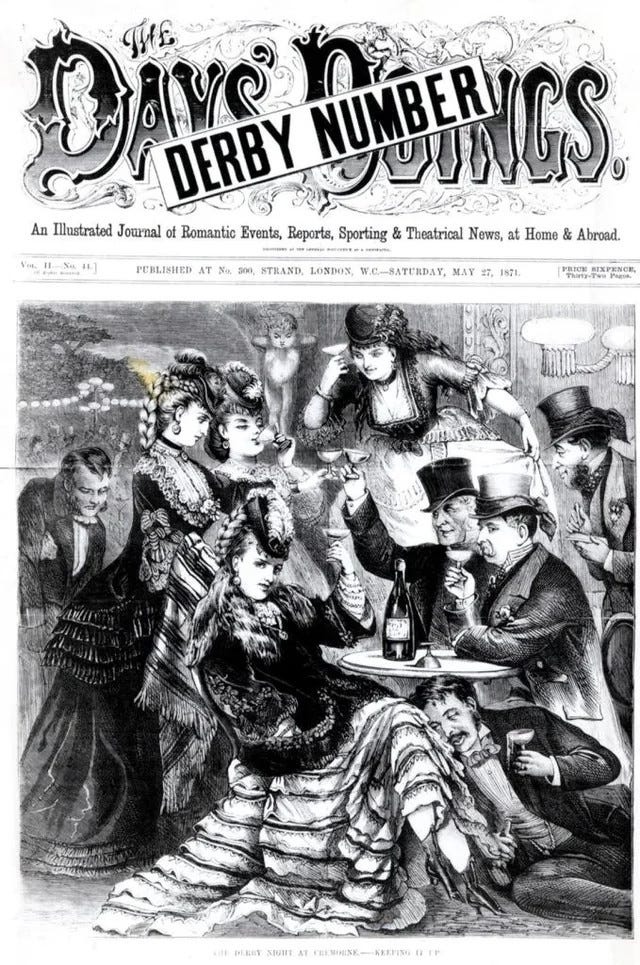
She appears on the cover of ‘Day’s Doings’ magazine, from 1871. The article mentions a society celebrity called Mabel Grey. A photo of Grey might allow us to identify her with some confidence as the woman at the centre of the illustration.
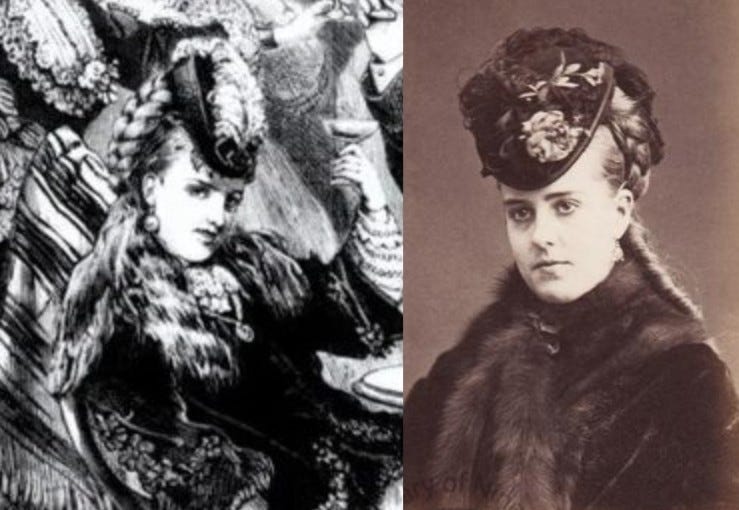
Grey was a notorious figure in the 1870s, and her National Portrait Gallery entry has her tagged under the category of ‘courtesans’. Here’s a full-on contemporary savaging of her reputation:
“Mabel Grey, who has ruined scores of young aristocrats and brought them to beggary, is the reputed mistress of Lord Carington, and has made several visits with him to Paris, Baden, and other places on the Continent. It is said that he has already squandered twenty thousand pounds upon this well-bred harlot, and it is the current talk in London that the Prince of Wales has also been on terms of an improper intimacy with Mabel Grey. At all events he is not ashamed to be seen speaking to her in Casinos or addressing her in public places, and the dear Prince has on several occasions been seen drinking champagne with her in the music halls and dancing rooms of the English capital. This is a very bad business for a bald-headed father of five children.” — Daniel Joseph Kirwan ‘Palace and Hovel’
So that’s the class of dame that this Cheers dive attracts.
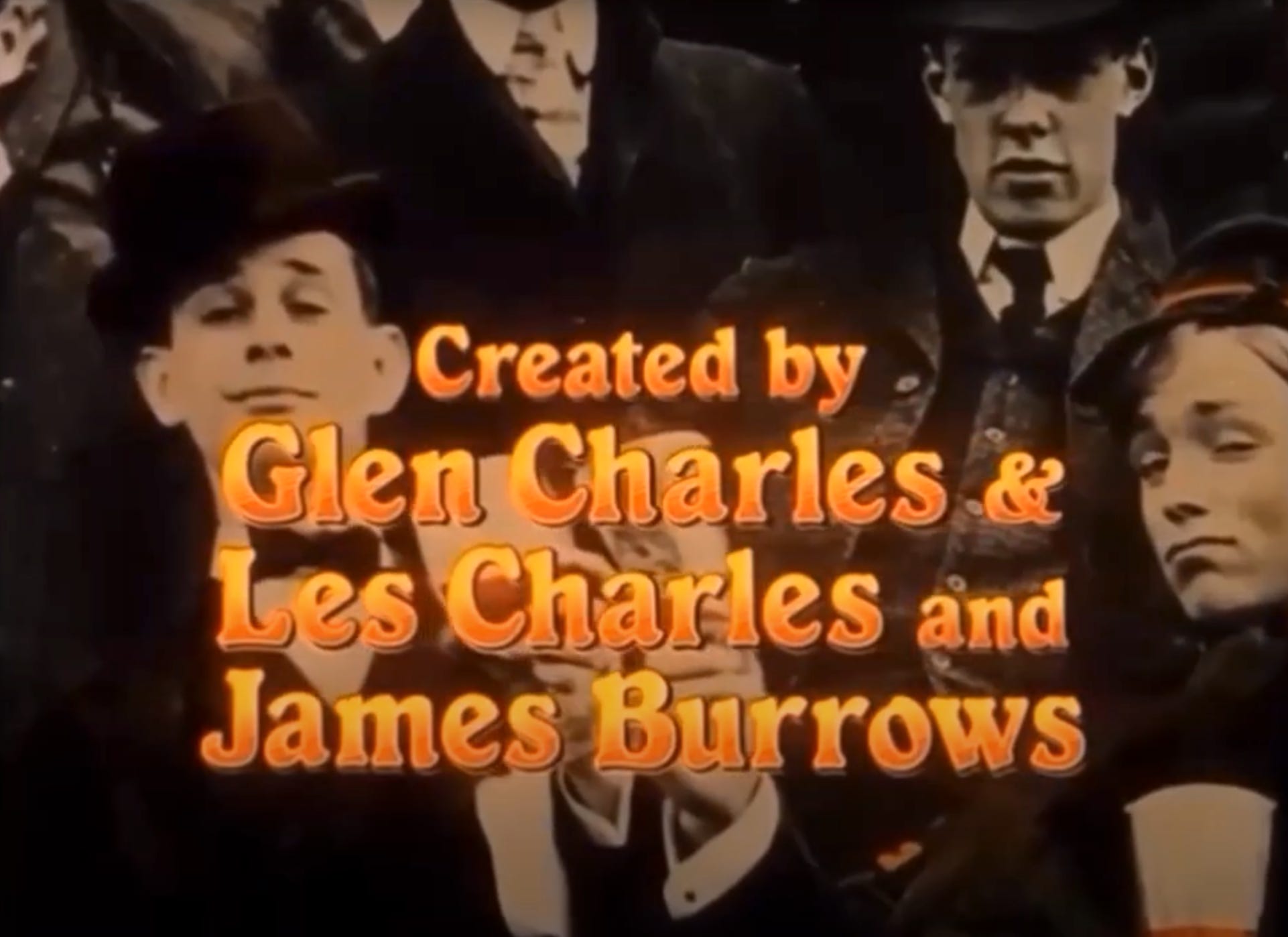
The creators’ card might be the one, alongside WE WIN, that pushes the Proustian Comfort Button for me. These guys are just great, aren’t they?
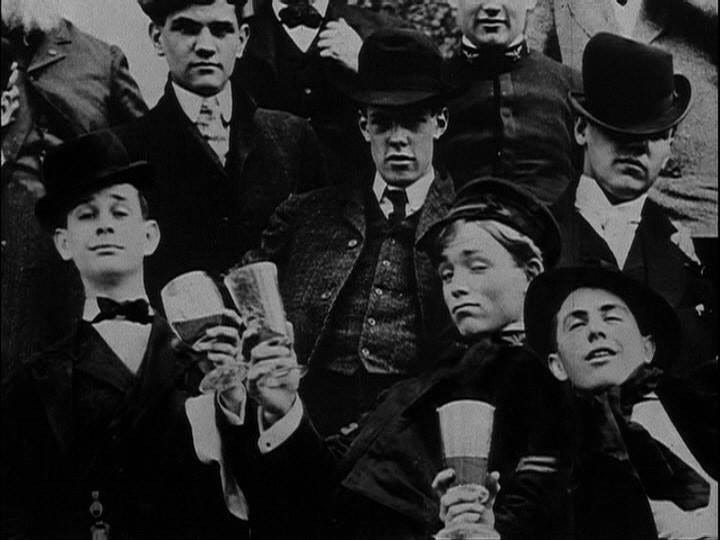
These, magnificently, are the Royal Rooters. ‘Rooters’ was an old slang term for sports fans. This is an image from 1908 of a load of Royal Rooters, fans of the Boston Americans, the team who would later change their name to the Boston Red Sox. So an appropriate picture to end on, in honour of Sam ‘Mayday’ Malone’s team.
Good, innit?
Thanks to all the decades of curious Cheers fans on the internet who have collected these for me to gather up into a single post. A lovely way to spend the morning. If I get any more clues, I’ll share them.
In the meantime, please enjoy this lovely picture of a man called Brett Bumgarner, who in 2013 dressed in possibly the greatest Halloween outfit of all time.
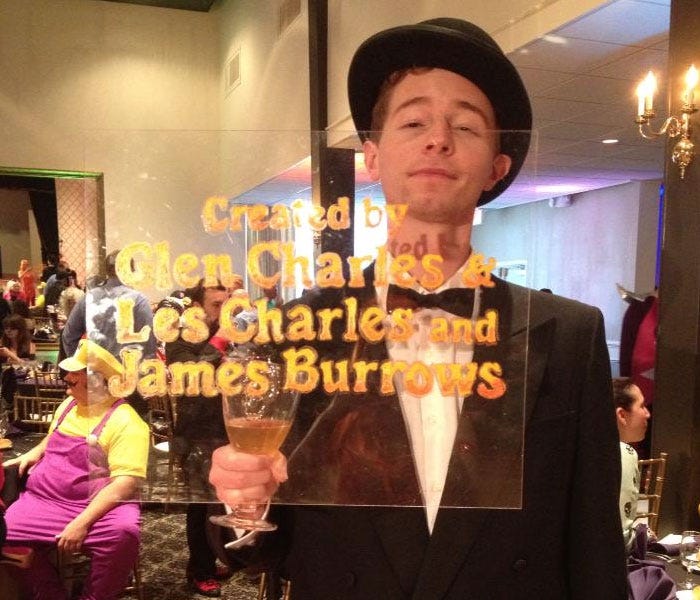
Thanks to all the many message board contributors over the years who’ve tracked this stuff down. Also specific thanks to Simon Thorp, Jo Kendall, and Paul Rhodes and Jaunty Art on BlueSky.
Here’s a great piece on the typography of the titles.
Here’s the piece that contains the Mabel Grey biographical information.